Collection of Emerging Active Regions That Produce Flares/CMEs
I. Events
1. X2.2 flare in AR 11158 on 2011-02-15
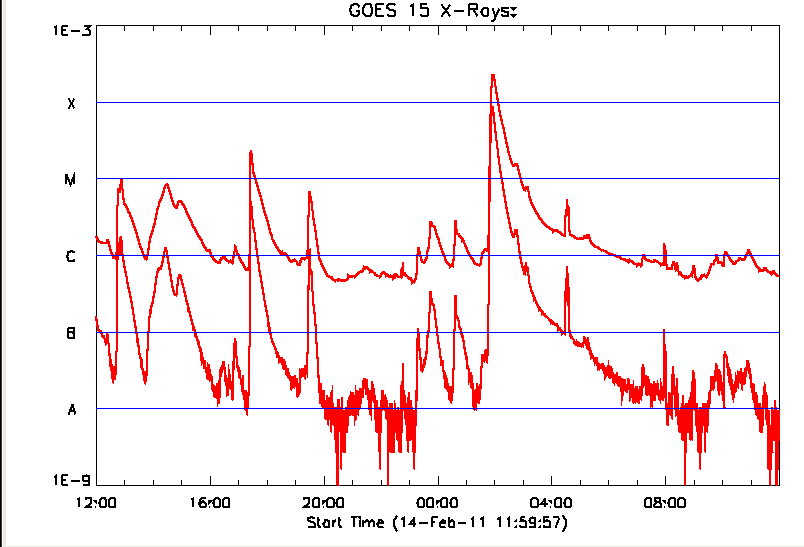 Fig. 1a: GOES X-rays
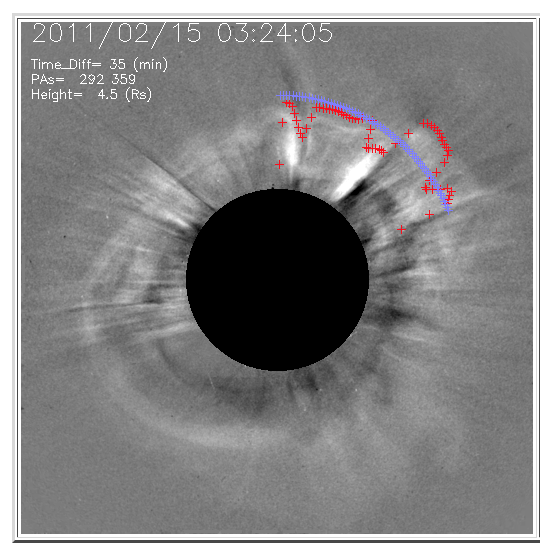 Fig. 1b: A halo CME
This X2.2 flare (see Fig. 1a)started at 01:44:00, peaked
at 01:56:00, and ended at 02:06:00, 2011 Feburary 15. A halo CME (v = 834 km/s) was
associated with this flare (Fig. 1b. This running difference
is from Space Weather Lab at GMU. A magnetic cloud (MC) and corotating interaction regions (CIR)
are detected at 1 AU at 03:00 19 Feburary 2011 (see GMU CME/ICME List). No significant negative DST was measured.
Fig. 1b: A halo CME
This X2.2 flare (see Fig. 1a)started at 01:44:00, peaked
at 01:56:00, and ended at 02:06:00, 2011 Feburary 15. A halo CME (v = 834 km/s) was
associated with this flare (Fig. 1b. This running difference
is from Space Weather Lab at GMU. A magnetic cloud (MC) and corotating interaction regions (CIR)
are detected at 1 AU at 03:00 19 Feburary 2011 (see GMU CME/ICME List). No significant negative DST was measured.
 Fig. 2: Full-disk magnetogram on 02/14/2011.
No big active regions were on the solar disk most of time during disk passage of AR 11158 ( see Fig. 2). A full-disk magnetogram movie can be viewed by
Full-disk movie, along with
a movie of Br in AR 11158
Fig. 2: Full-disk magnetogram on 02/14/2011.
No big active regions were on the solar disk most of time during disk passage of AR 11158 ( see Fig. 2). A full-disk magnetogram movie can be viewed by
Full-disk movie, along with
a movie of Br in AR 11158 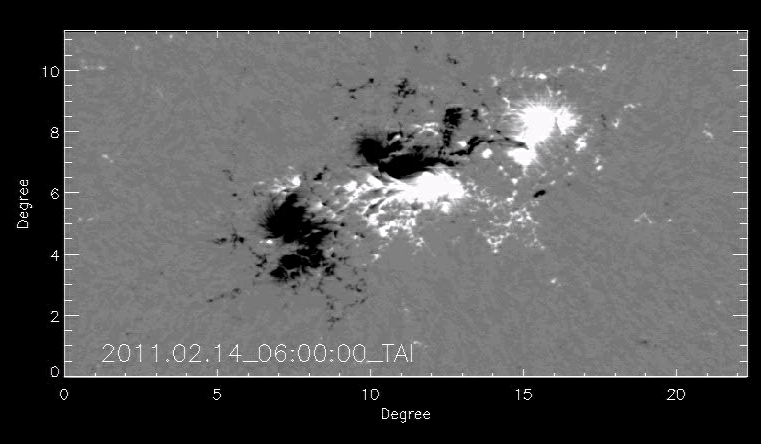 AR 11158 Br movie.
2. C3.7 flare in AR 11577 on 2012-09-27
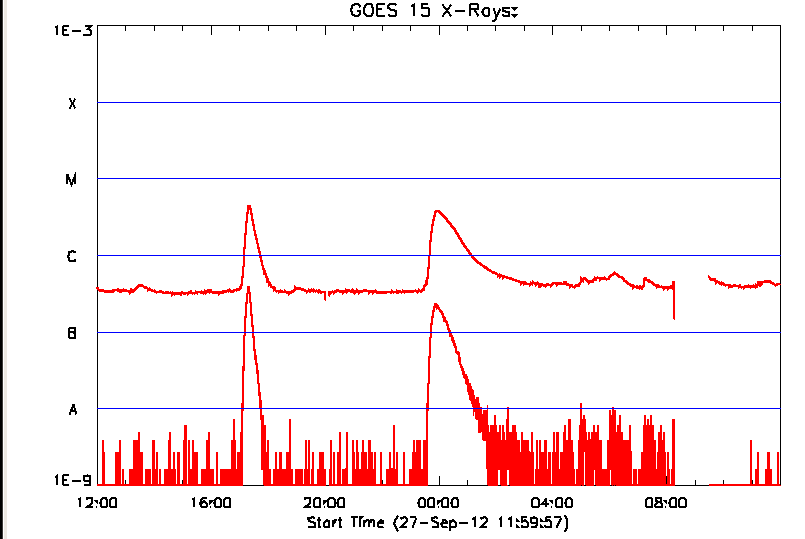 Fig. 3a: GOES X-rays
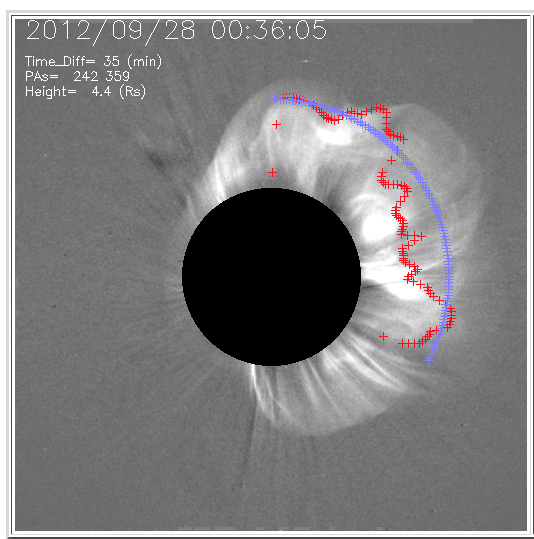 Fig. 3b: A halo CME
The C3.7 flare ( Fig. 3a) started at 23:36, peaked at 23:57 2012-09-27,
and ended at 00:34 2012-09-28. A halo CME (v = 343 km/s; Fig. 3b)
was associated with it. Shock front (SH) and CME ejecta front (EJ) were detected at 12:00 UT 2012-10-01
at 1 AU that was suggested to be associated with this solar event (see GMU CME/ICME List at GMU).
Fig. 3b: A halo CME
The C3.7 flare ( Fig. 3a) started at 23:36, peaked at 23:57 2012-09-27,
and ended at 00:34 2012-09-28. A halo CME (v = 343 km/s; Fig. 3b)
was associated with it. Shock front (SH) and CME ejecta front (EJ) were detected at 12:00 UT 2012-10-01
at 1 AU that was suggested to be associated with this solar event (see GMU CME/ICME List at GMU).
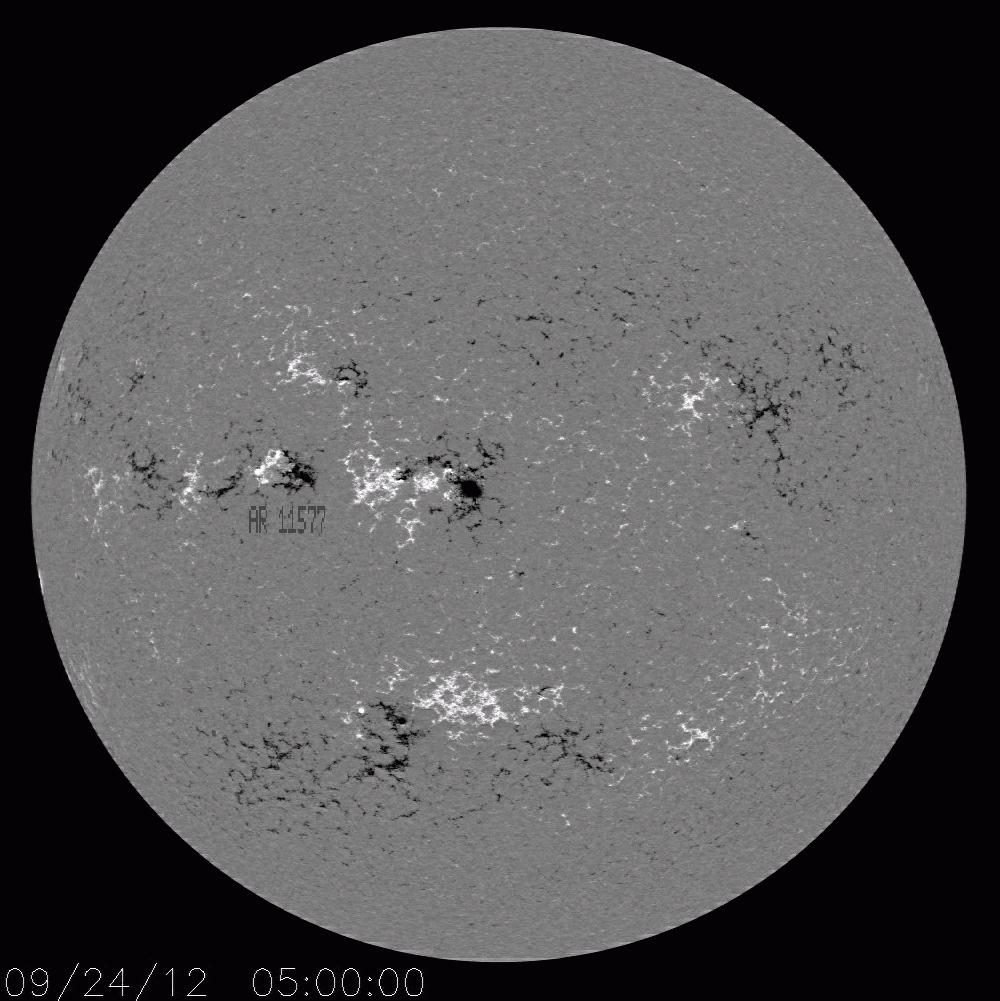 Fig. 4a: Full-disk magnetogram
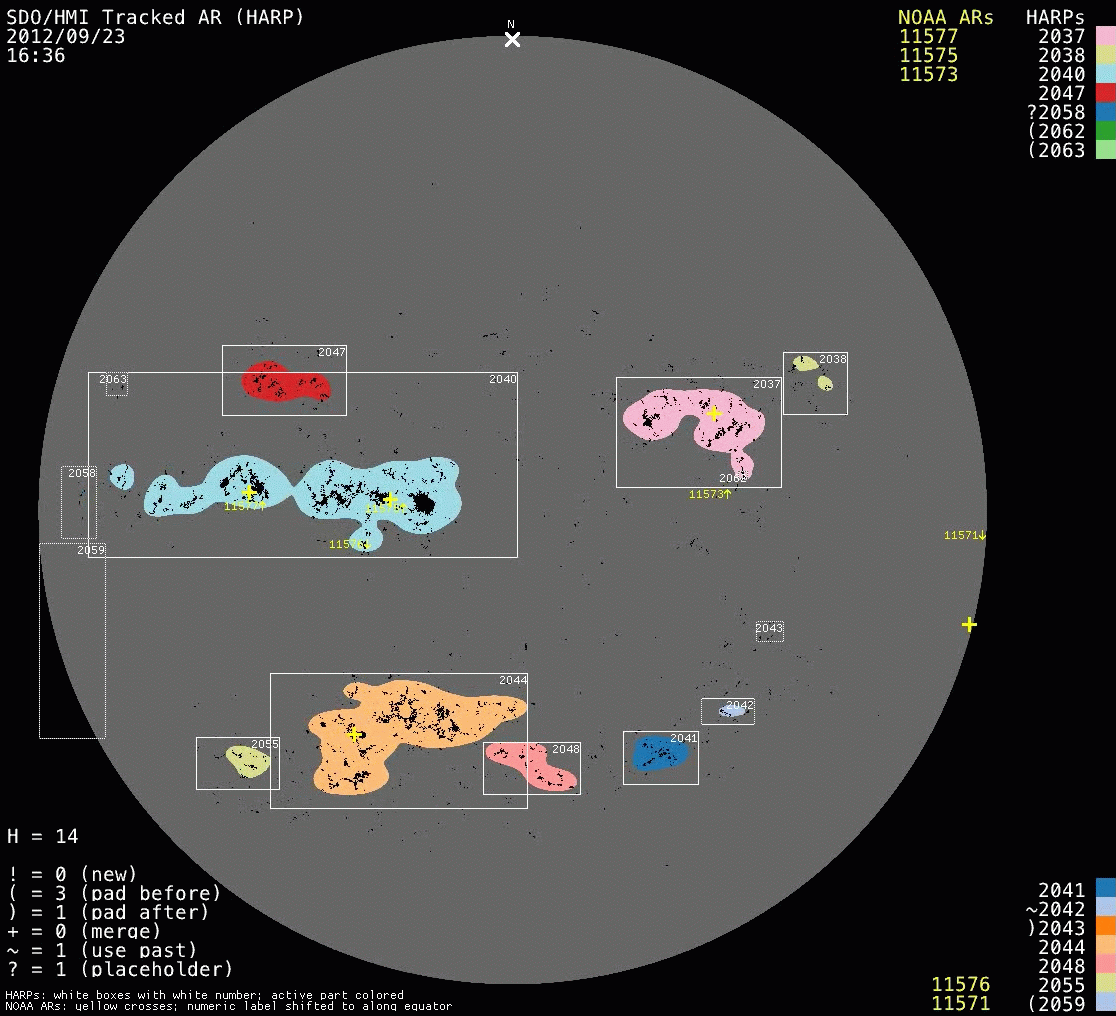 Fig. 4b: Harp image
AR 11577 is a small emerging active region ( Fig. 4a). It began to emerge on 2012-09-22, and decayed quickly
in the following days. It became plage-like features at the beginning of 2012-09-27, and began
the second emerging thereafter. This flare was occurred as the second emergence started
(see the movie Full-disk movie). A Br movie of AR 11577 is
here.
There was another mature active region (AR 11575) close to AR 11577 ( Fig. 4b). Model of this event
might be of difficulty.
Fig. 4b: Harp image
AR 11577 is a small emerging active region ( Fig. 4a). It began to emerge on 2012-09-22, and decayed quickly
in the following days. It became plage-like features at the beginning of 2012-09-27, and began
the second emerging thereafter. This flare was occurred as the second emergence started
(see the movie Full-disk movie). A Br movie of AR 11577 is
here.
There was another mature active region (AR 11575) close to AR 11577 ( Fig. 4b). Model of this event
might be of difficulty.
3. X1.3 flare in AR 11429 on 2012-03-07
AR 11429 is not an emerging active region during its disk passage. An emerging active region AR 11430 was near AR 11429. Studying magnetic connectivity between them, and further exploring underlying effect of emergence of AR 11430 that may apply to triggering the flare might be of interest.
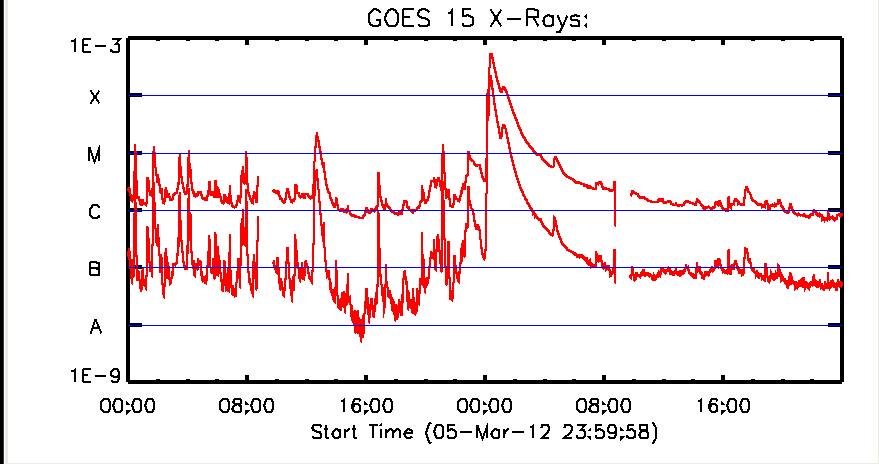 Fig. 5a: GOES X-rays
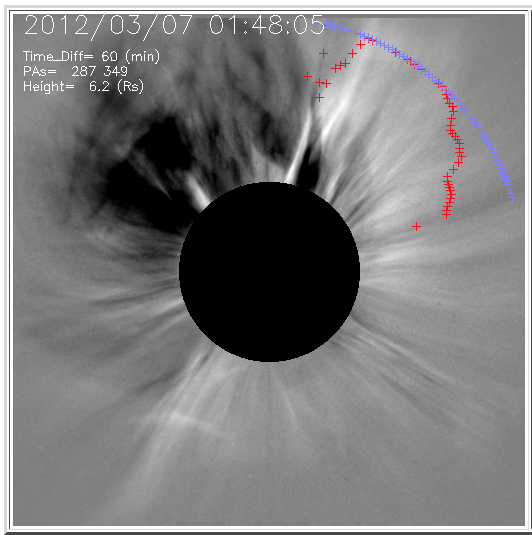 Fig. 5b: A halo CME
The X1.3 flare occurred at 01:05, peaked at 01:14, and ended at 01:23 2012-03-07.
A halo CME (v = 854 km/s) was associated with this flare. SH and EJ were detected at 1 AU
at 20 UT 2012-03-08 (see GMU CME/ICME List at GMU). DST was measured to be -133.
Fig. 5b: A halo CME
The X1.3 flare occurred at 01:05, peaked at 01:14, and ended at 01:23 2012-03-07.
A halo CME (v = 854 km/s) was associated with this flare. SH and EJ were detected at 1 AU
at 20 UT 2012-03-08 (see GMU CME/ICME List at GMU). DST was measured to be -133.
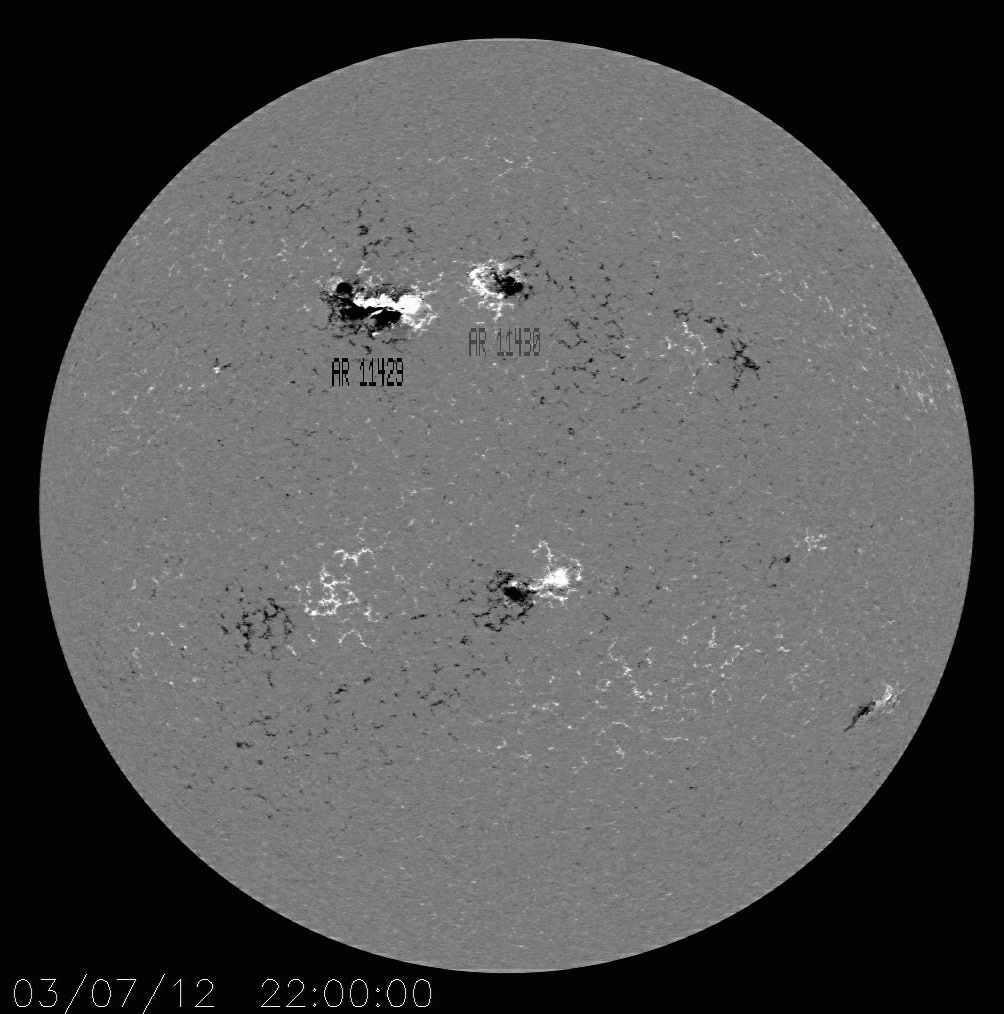 Fig. 6a: Full-disk magnetogram
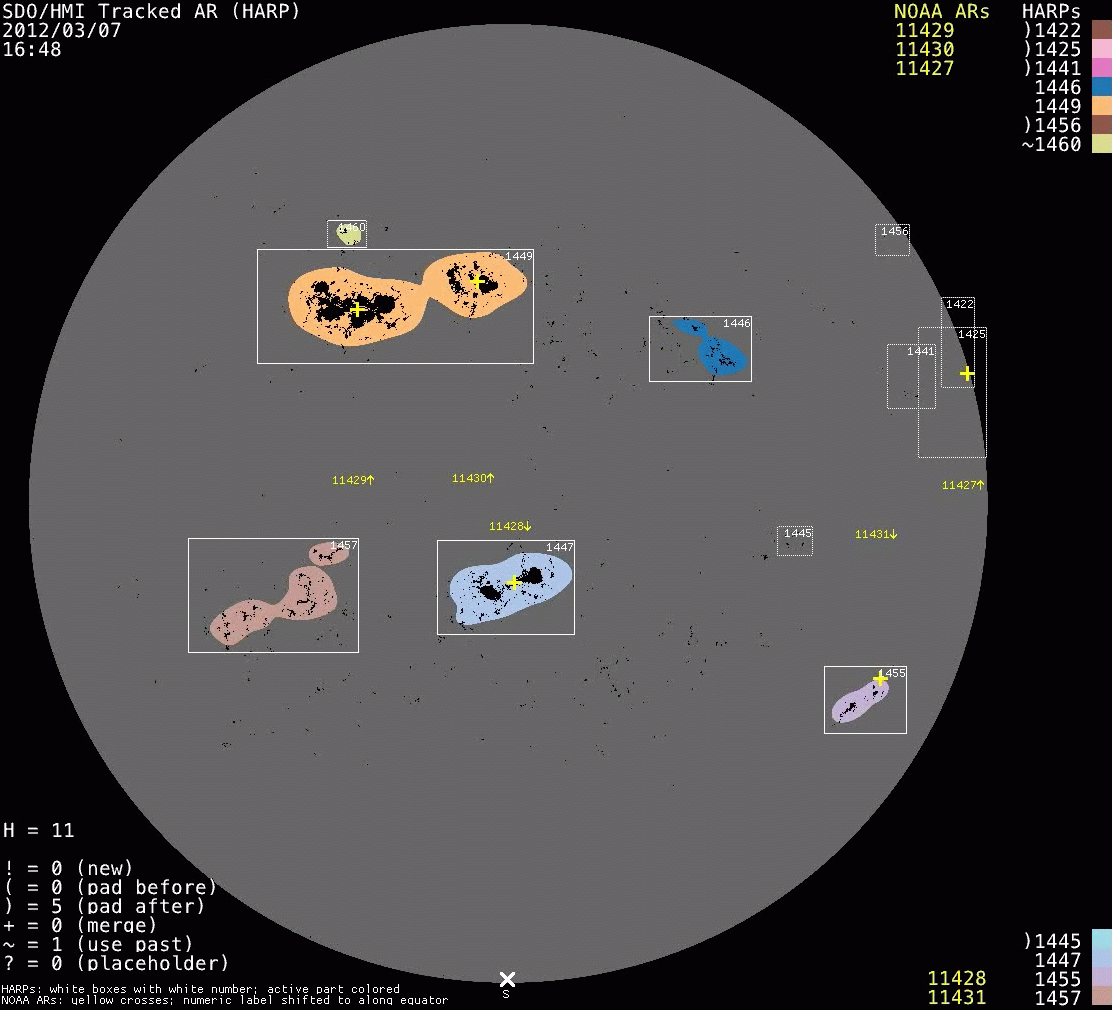 Fig. 6b: Harp
There are three active regions on the disk while the flare occurrred. Emergence and evolution of
AR 11430 can be viewed from a full-disk magnetic field movie.
A Br-movie of ARs 11429 and 11430 is here.
Fig. 6b: Harp
There are three active regions on the disk while the flare occurrred. Emergence and evolution of
AR 11430 can be viewed from a full-disk magnetic field movie.
A Br-movie of ARs 11429 and 11430 is here.
4. Emerging active region AR 11928 from 2013-12-16 to 2013-12-21
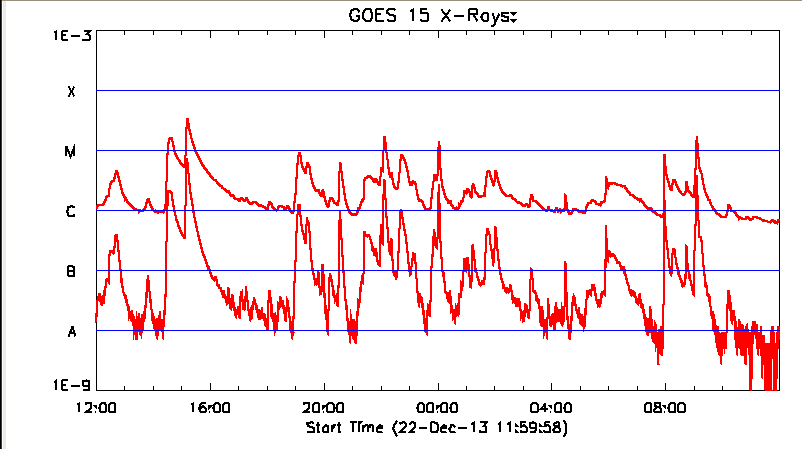 Fig. 7: GOES X-rays.
The emerging active region emerged on 2013-12-16, and underwent dramatic evolution since then
It produced six M-class and many C-class flares ( see Fig. 7).
Two flares, one is a M1.3 flare occurred at
23:44 UT 2013-12-22T and the other C7.9 flare at 07:53 UT 2013-12-23, may be associated with
partial halo CMEs. While the active region was near the south-western limb
( Fig. 8a), one of the
said CME propogated toward the east ( Fig. 8b), and the other
toward north-western ( Fig. 8c). Association of
the flares and CMEs are to be examined.
Fig. 7: GOES X-rays.
The emerging active region emerged on 2013-12-16, and underwent dramatic evolution since then
It produced six M-class and many C-class flares ( see Fig. 7).
Two flares, one is a M1.3 flare occurred at
23:44 UT 2013-12-22T and the other C7.9 flare at 07:53 UT 2013-12-23, may be associated with
partial halo CMEs. While the active region was near the south-western limb
( Fig. 8a), one of the
said CME propogated toward the east ( Fig. 8b), and the other
toward north-western ( Fig. 8c). Association of
the flares and CMEs are to be examined.
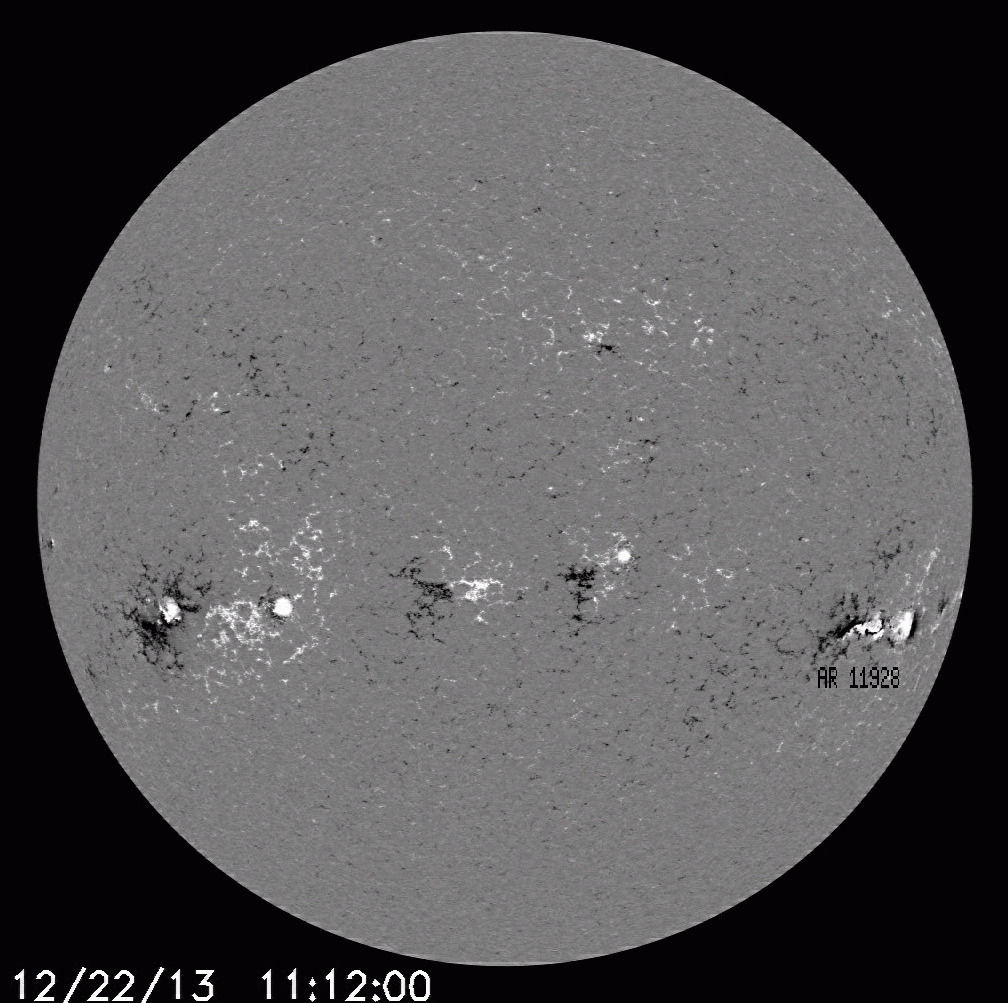 Fig. 8a: Full-disk magnetogram
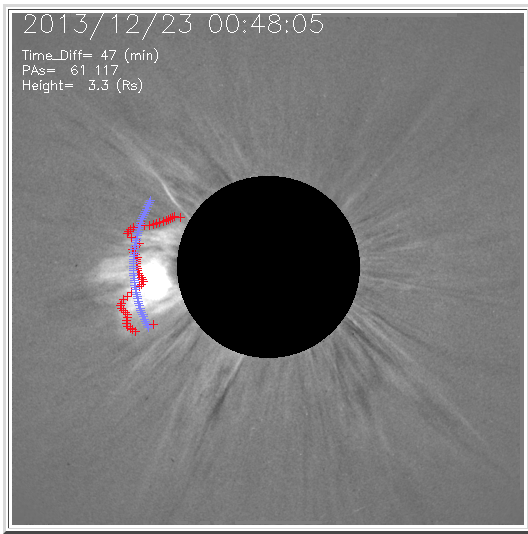 Fig. 8b: CME-1
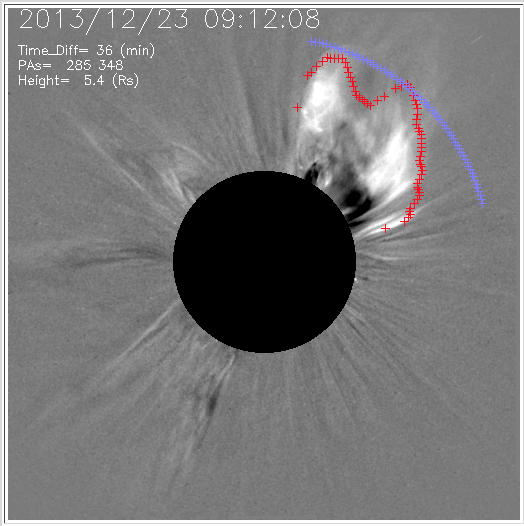 Fig. 8c: CME-2
There was a small sheath region detected at 1 AU at 3:30 UT December 25, 2013. ``Starting
around 5:00 UT and lasting until approximately 18:00 UT there is a region of strong total B,
with a very steady negative Bz and clear rotations in Bx and By (see Fig. 9). The Velocity is only
around 300 Km/s, so it isn't very fast at all (and is pretty similar to the ambient solar wind),
but over the same time region there is a gradual decline in velocity from 330 to 270 km/s,
consistent with ICME expansion. (Phil Hess at GMU)''
Fig. 8c: CME-2
There was a small sheath region detected at 1 AU at 3:30 UT December 25, 2013. ``Starting
around 5:00 UT and lasting until approximately 18:00 UT there is a region of strong total B,
with a very steady negative Bz and clear rotations in Bx and By (see Fig. 9). The Velocity is only
around 300 Km/s, so it isn't very fast at all (and is pretty similar to the ambient solar wind),
but over the same time region there is a gradual decline in velocity from 330 to 270 km/s,
consistent with ICME expansion. (Phil Hess at GMU)''
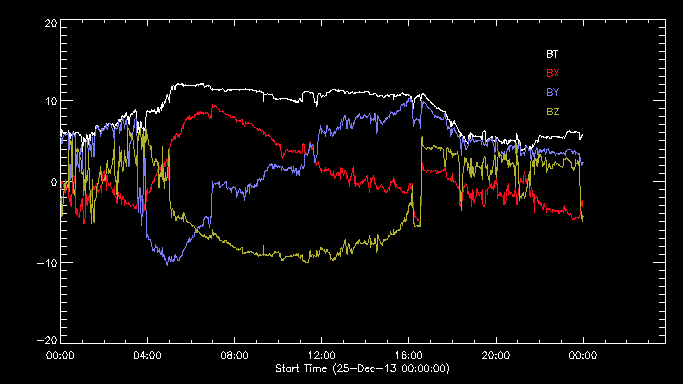 Fig. 9: Magnetic field at 1 AU
Full-disk magnetic field movie is here. Br movie of AR 11928 is here.
Fig. 9: Magnetic field at 1 AU
Full-disk magnetic field movie is here. Br movie of AR 11928 is here.
II. Conclusion
While other events contain uncertainties one way or the other, AR 11158 appears to provide a clean case with much less uncertainties. AR 11158 might be a good choice though it has been intensively analyzed.
